Statement of Research – Stephen Blades 12-3-2023
My artwork is created by transforming materials through labor-intensive processes into forms that reference and subvert historical religious artifacts. My work asks the viewer to subsume themselves in the decadence of physical reality through these objects, which reflect my esoteric beliefs that this is the only existence we have so we should revel in the physicality of this life. Completed works share a spiritual experience with material and workmanship. These objects encapsulate time, creating loving relics of moments spent with steel, copper, and wood. Each piece is a meditation on material, its history, my history with it, and its interactions with other materials. Each substance brings its own set of qualities and limitations that inform the composition and lead to new discoveries as I push these materials to interact with one another. I want to pass on this love of materials and physical reality, through forms and surfaces that enchant the eye and call to be touched by the viewer. Creating a tension of the uncaressed surface, between the viewer and the object.
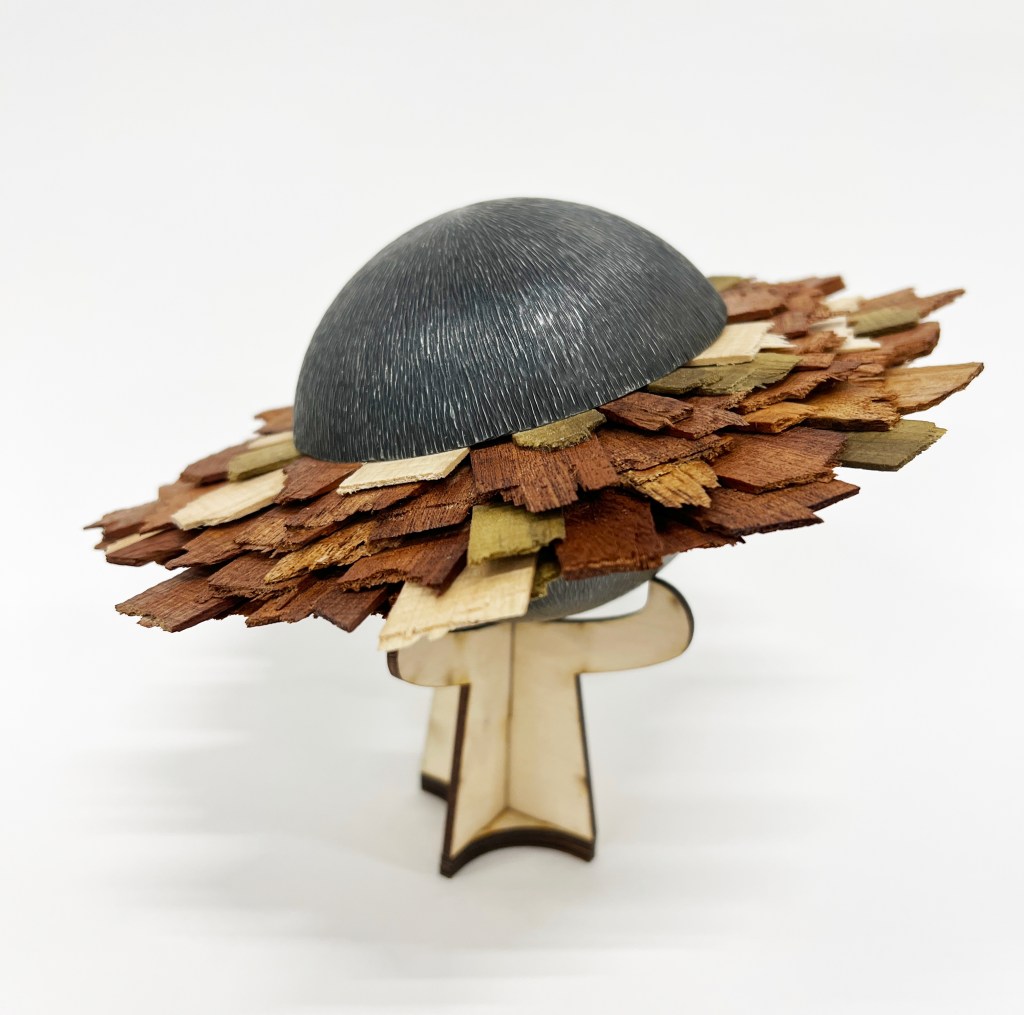
I am endlessly enchanted by the physical substance of our existence. The thin strength of sheet steel, the physical heft and visual weight of bronze, the flexible beauty of mahogany. I am fascinated by their history. How do these materials come to us through historical objects? How did artisans of the past interact with these materials? What are the traditions of these materials? I carve and hammer them into new forms, to impose my will on reality through the transformation of these materials into new shapes and compositions. Spheres, disks, and arcs provide a continuous surface to explore with texture and depth. I often combine these curving forms with jagged rough openings and sharp protrusions piercing their surfaces to create contrast. Placing smoothly curving steel surfaces next to broken sharp wooden strips to highlight the differences of each, while also creating an opportunity for the viewer to experience the unexpected qualities of a medium. I choose to focus on simple shapes and forms that are heavily embellished as these forms do not detract from the viewer’s experience of material and surface.
I create objects that resemble historical artifacts, like reliquaries, because they carry with them a sense of mystery, time, and enchantment. I reference forms from historical religious objects like gothic halos, the globus cruciger, and pagan icons. While these historical objects were created to link the divine spiritual realm with the physical corporeal realm, my work uses that existing religious visual language to subvert that goal and create decadent works that focus on the object before you and not an unknown ethereal eternity. These objects ask the viewer to be here and now with them, to see the detail, revel in the form and substance before them.
I am influenced by reliquaries and many ancient religious objects by their use of materials and the invested time that creates these special objects of reverence. Historical relics have their specialness and sacredness enhanced by these laboriously created containers. That labor, those hours of life given by artists and crafts people, as seen captured in the details of these objects, adds a worshipful weight to these relics. I see my own labor in much the same way in my work. The focusing of time and energy into detail and ornamentation allow me to become lost in process, entering something akin to a meditative state. Allowing me to find those moments of peace that I seek in the challenging process of making my work. That process is both the physical act of creation and exploration of the history of that material or process. Ornamentation is an act of reverence, the obsessing over an object imbues them with sacredness, the sacredness of invested time.
Artists Tony Cragg, Martin Puryear, David Huang, Ken Price, and Lee Bontecou have provided insight into my own practice, particularly through their heavy connection to materials and processes.
 Stephen Blades
Leave a comment